
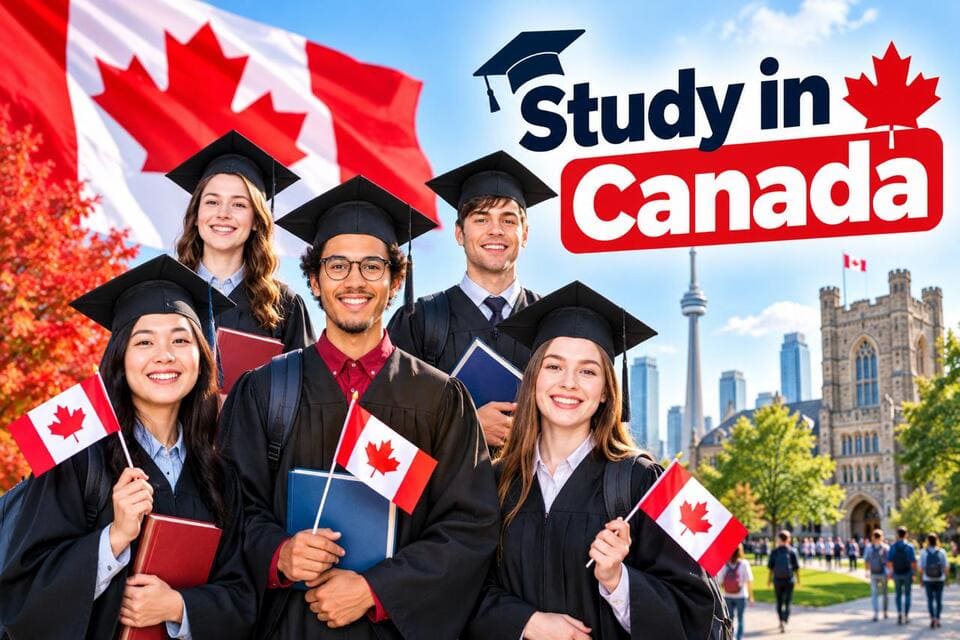
Study at a Canadian College or University — Explore Your Options Before Applying
Would you like to study in Canada, earn an internationally recognized qualification, gain valuable experience and explore opportunities for your future?
Canada offers educational opportunities for international students at universities, colleges, schools and other eligible educational institutions.
However, choosing a school and receiving an admission offer does not automatically mean that you qualify for a Canadian study permit or will be eligible to work after graduation.
The first important step is to evaluate your educational plans and immigration eligibility before paying tuition fees or making major financial commitments.
Canadian Universal Solutions Corp. helps international students and their families understand Canadian study permit requirements and arrange professional immigration assessments with an authorized Canadian immigration consultant.
1. What Is a Canadian Student Visa or Study Permit?
A Canadian study permit is an immigration document that generally authorizes a foreign national to study at an eligible Canadian educational institution.
A study permit is different from a visitor visa.
Depending on nationality, students may also need a Temporary Resident Visa (TRV) or an Electronic Travel Authorization (eTA) to travel to Canada.
Most foreign nationals planning to study in Canada for more than six months require a study permit, although exceptions apply.
Approval depends on meeting Immigration, Refugees and Citizenship Canada (IRCC) requirements.
2. Where Can International Students Study in Canada?
International students may explore educational opportunities at:
- Canadian universities offering bachelor's, master's and doctoral degrees.
- Public colleges offering diploma and certificate programs.
- Eligible private educational institutions.
- Primary and secondary schools.
- Eligible vocational and professional training institutions.
Popular study destinations include Ontario, British Columbia, Alberta, Manitoba, Nova Scotia and New Brunswick.
Not every school or program provides the same immigration benefits.
Post-secondary applicants should confirm that their institution is a Designated Learning Institution (DLI).
Students who plan to work after graduation should also verify whether their specific program meets Post-Graduation Work Permit (PGWP) requirements.
Canadian Universal Solutions Corp. can help clients understand these distinctions before selecting an educational program.
3. Main Requirements for a Canadian Study Permit
Applicants generally need to demonstrate:
- Acceptance by a Designated Learning Institution (DLI).
- A valid passport or acceptable travel document.
- Sufficient financial resources.
- A genuine purpose of study.
- Compliance with applicable immigration requirements.
- An intention to comply with the conditions of temporary residence.
- Medical and other admissibility requirements, where applicable.
- A Provincial Attestation Letter (PAL) or Territorial Attestation Letter (TAL), unless exempt.
Students planning to study in Quebec generally require a Quebec Acceptance Certificate (CAQ), subject to applicable exceptions.
Certain applicants, including eligible master's and doctoral students at public DLIs, are exempt from the PAL/TAL requirement.
Why Is an Immigration Assessment Important?
Applicants may encounter difficulties if their selected program does not match their educational background, their financial evidence is insufficient or their study plans are not clearly explained.
A professional assessment can help identify potential concerns before an application is submitted.
4. How Much Money Do You Need to Study in Canada?
International students must demonstrate sufficient funds to cover:
- Tuition fees.
- Living expenses.
- Transportation to and from Canada.
- Expenses for accompanying family members, where applicable.
For applications submitted under the financial requirements effective September 1, 2026, the minimum living expense requirement outside Quebec is:
- One person: CAD $23,448 per year.
- Two family members: CAD $29,192 per year.
- Three family members: CAD $35,888 per year.
- Four family members: CAD $43,572 per year.
These amounts do not include tuition fees or transportation costs.
Quebec has separate financial requirements.
Students must demonstrate that sufficient funds are available without relying on future employment in Canada.
Financial requirements may change. Applicants should verify the applicable amounts before submitting their applications.
Canadian Universal Solutions Corp. can help arrange an assessment of financial documentation requirements based on the applicant's circumstances.
5. Can International Students Work While Studying?
Eligible international students may work while studying in Canada.
Under the applicable IRCC rules, qualifying students may work:
- Up to 24 hours per week off campus during regular academic sessions.
- Unlimited hours off campus during regularly scheduled academic breaks, if eligible.
- On campus, subject to applicable requirements.
Students must meet all employment eligibility conditions and comply with their study permit.
Not all international students are authorized to work.
For example, students enrolled only in certain language training programs may not qualify for off-campus employment.
6. Can You Work in Canada After Graduation?
Some international graduates may qualify for a Post-Graduation Work Permit (PGWP).
A PGWP may allow eligible graduates to gain Canadian work experience after completing their studies.
However, not every institution or educational program qualifies.
Eligibility may depend on:
- The institution and specific program.
- The type and duration of studies.
- The date of the original study permit application.
- English or French language proficiency.
- Field-of-study requirements, where applicable.
- Compliance with other IRCC conditions.
Certain degree programs and college programs have different eligibility requirements.
Important: A school's DLI status does not automatically mean that all its graduates qualify for a PGWP.
Before choosing a college or university, students should verify the eligibility of their specific program.
7. Can Studying in Canada Lead to Permanent Residence?
Canadian education may help some graduates qualify for future immigration programs.
Potential pathways may include:
- Express Entry, where the applicant meets the applicable requirements.
- Provincial Nominee Programs (PNP).
- Other eligible federal or provincial immigration pathways.
Eligibility may depend on Canadian work experience, language proficiency, education, occupation, provincial requirements and other factors.
Studying in Canada does not automatically guarantee permanent residence.
Students whose long-term goal includes immigration should consider this objective before choosing an educational program.
Canadian Universal Solutions Corp. can help arrange an individual assessment of possible study-to-immigration pathways.
8. Can You Bring Your Family to Canada While Studying?
Some international students may be accompanied by eligible family members.
Depending on their circumstances, family members may apply for visitor status, study permits or work permits.
Open work permits for spouses or common-law partners are restricted to certain categories of international students, including eligible students in:
- Master's degree programs lasting at least 16 months.
- Doctoral degree programs.
- Certain professional degree programs.
- Other specifically eligible programs.
A spouse does not automatically qualify for an open work permit simply because their partner studies in Canada.
If you are planning to study in Canada with your family, it is important to assess the entire family's immigration options before applying.
9. How to Apply for a Canadian Study Permit
The process generally includes:
- Evaluating your educational goals and immigration circumstances.
- Choosing an appropriate Canadian institution and study program.
- Obtaining a Letter of Acceptance (LOA).
- Obtaining a PAL/TAL or CAQ where required.
- Preparing financial and supporting documentation.
- Submitting the study permit application to IRCC.
- Completing biometrics or medical examinations where required.
- Awaiting the immigration decision.
Processing times and additional requirements depend on individual circumstances and the applicable immigration rules.
10. Why Start With Canadian Universal Solutions Corp.?
Applying to a Canadian school and applying for a study permit are two different processes.
A student may receive an offer of admission but still face immigration difficulties.
Before paying tuition fees or making significant commitments, it is advisable to assess your immigration eligibility.
Canadian Universal Solutions Corp. helps clients understand available educational and immigration options and arrange professional assessments with an authorized Canadian immigration consultant.
An individual assessment may review:
- Your age, education and academic background.
- Previous studies and professional experience.
- English or French language proficiency.
- Financial resources and supporting documentation.
- Proposed educational institution and program.
- Study permit requirements.
- PGWP eligibility considerations.
- Potential immigration pathways after graduation.
- Options for accompanying family members.
Start With a Professional Immigration Assessment
Planning to study in Canada?
Contact Canadian Universal Solutions Corp. before selecting a school, paying tuition or submitting your study permit application. Book a consultation to understand your options, identify potential immigration requirements and make an informed decision about studying in Canada.
Book a consultationDisclaimer
This information is provided for general informational purposes only and does not constitute individualized legal or immigration advice.
Canadian Universal Solutions Corp. is a private company and is not affiliated with or acting on behalf of the Government of Canada or Immigration, Refugees and Citizenship Canada (IRCC).
Study permit requirements, financial thresholds, PGWP eligibility rules, student work conditions and immigration policies may change without notice.
Admission to an educational institution does not guarantee study permit approval, employment authorization, a PGWP or permanent residence.
Individual immigration assessments and regulated immigration advice must be provided by an appropriately authorized professional.
Publication date: November 4, 2026.
Disclaimer:
The information on this page is general information and is not a legal opinion or a guarantee of any immigration result. Immigration requirements, allocations and intake periods may change. Program availability and eligibility should be confirmed immediately before an application is submitted.